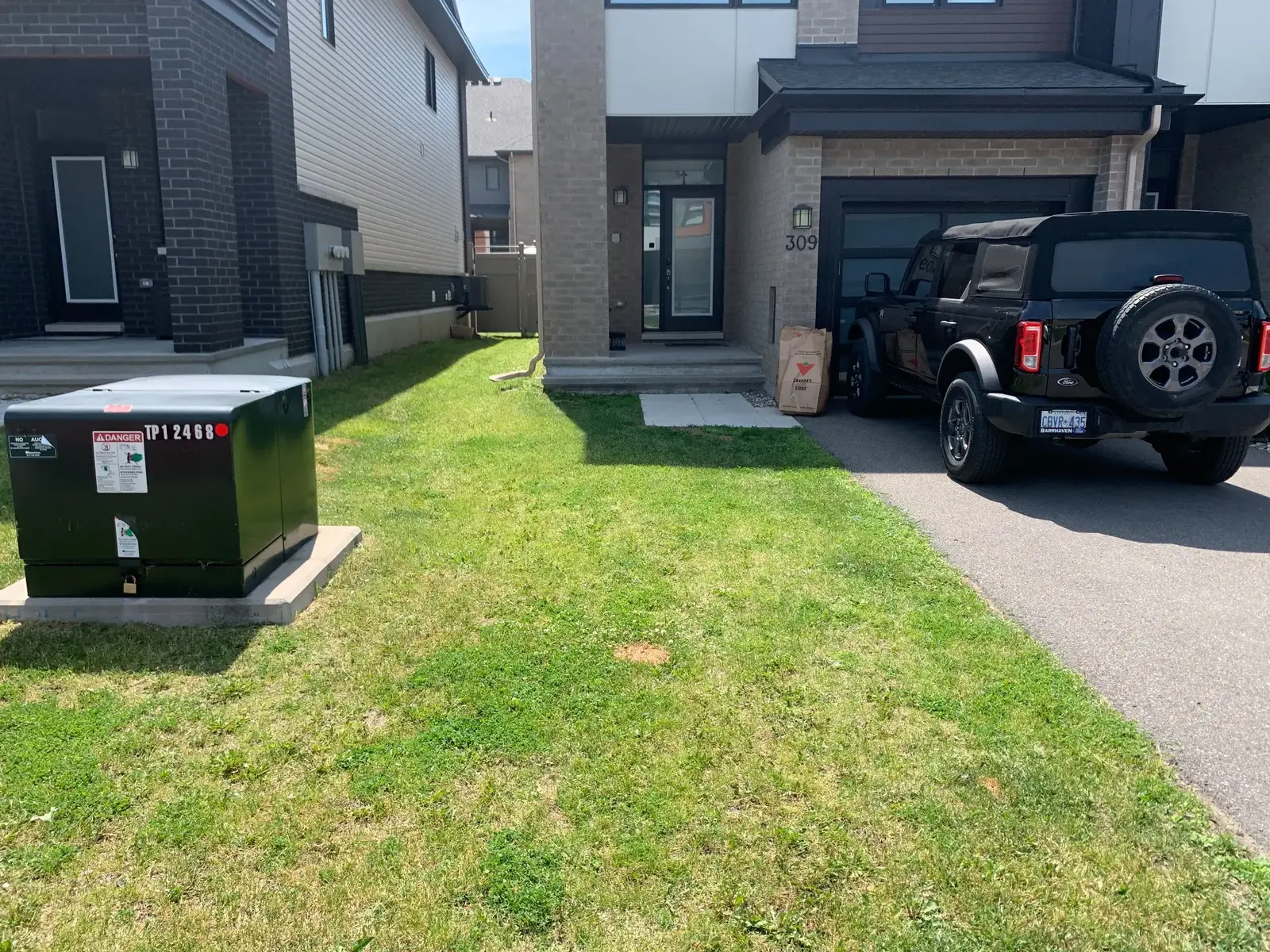
A good spring lawn does not start with doing everything on the first warm afternoon. In Ottawa, the smarter sequence is to check soil conditions, identify actual problems and choose only the work your property needs.
Start with soil conditions, not the calendar
Snow may be gone while the ground is still saturated. Walking or running heavy equipment across a soft lawn can compact the soil and leave ruts. Wait until the yard can support normal foot traffic without leaving obvious impressions.
A shaded Orléans yard can dry at a different pace from an exposed lawn on the same street. Use conditions on your own property, not an arbitrary date, to decide when work begins.
A practical sequence for spring
1. Inspect the property. Note areas with standing water, snowplow damage, compacted paths, matted debris and thin turf. Photograph concerns before you start.
2. Gently remove branches and accumulated litter. Avoid aggressively raking dormant or saturated grass.
3. Check drainage and grading. Persistent water near foundations or recurring low spots merit assessment before topdressing or reseeding.
4. Begin mowing only when the lawn is actively growing and the surface is firm enough. Set mower height appropriately for the turf species and avoid removing too much blade in one pass.
5. Decide whether aeration, overseeding or fertilization is justified after examining the lawn. These are separate treatments; not every lawn needs all three.
Why aeration and seeding are not automatic
Core aeration can relieve compaction in the right conditions. Overseeding is useful when turf density is weak, but seed requires viable soil contact, adequate water and suitable temperatures to establish.
A dense, healthy lawn without compaction may need only routine mowing and targeted maintenance. An area that repeatedly fails under dense tree shade may need a different landscape strategy, not another round of seed.
What to ask before you book
Identify whether your goals are better turf density, healthier soil, fewer weeds, or simply a more dependable maintenance schedule. Ask what treatments are proposed, which problems they address, and what preparation or aftercare you will handle.
Daisy & Co can document these preferences through Make Your Plan, but the final scope, treatment timing, product selection and price require a property-specific review.
Educational content prepared by Daisy & Co · October 29, 2026. Information is general; decisions depend on the specific property, current product specifications and field assessment.