Grubs & Insects
Grubs, chinch bugs or drought? Read the damage before treating
Brown lawn patches can look similar. Here is how Ottawa homeowners can narrow the cause without guessing.
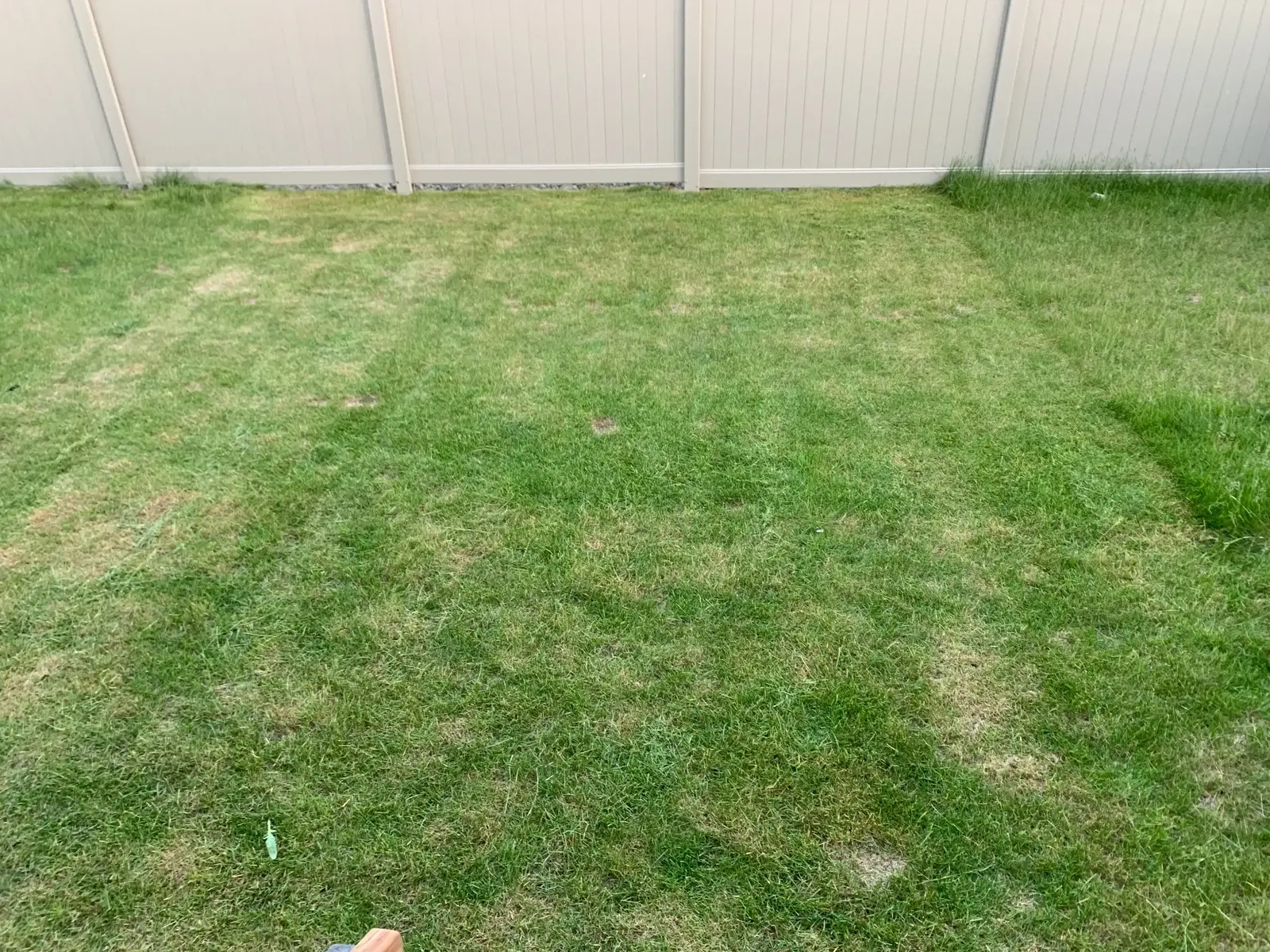
A brown patch is a symptom, not a diagnosis. Heat, compacted soil, mower injury, pet urine, disease, chinch bugs and white grubs can overlap. Treating the wrong cause wastes time and may further stress the turf.
The short answer
- Check the pattern, location and timing before applying anything.
- Chinch-bug damage often appears in hot, sunny areas during summer.
- Grub confirmation requires inspecting the soil and root zone—not relying on colour alone.
Begin with the pattern
Drought stress often follows sunny exposures, shallow soil or sprinkler gaps. Chinch-bug injury can also favour hot, dry areas, including south-facing slopes and pavement edges. Grub damage relates to root feeding and may become obvious when turf loses anchorage.
Straight lines can point to equipment, application or irrigation patterns. Small intense spots may relate to pets. Look beyond the colour.
Check for chinch bugs
Part the turf at the boundary between damaged and healthy grass, where active insects are more likely than in a completely dead centre. Chinch bugs are small and can be difficult to identify, so collect a clear close photograph or specimen if possible.
A flotation test using a bottomless cylinder pressed into the turf can bring insects to the surface when filled with water, but correct identification still matters before treatment.
Check for white grubs
Cut and fold back a small section of affected turf to inspect the root zone. White grubs are C-shaped larvae with a brown head. Count findings across several representative spots rather than treating one insect as proof of a damaging population.
Loose turf can also result from dead roots caused by other stress. Animal digging may accompany grubs but is not a reliable diagnosis by itself.
Rule out water and soil problems
Probe the soil at the edge and centre of the patch. Water may be missing the area, running off compacted soil or failing to penetrate a thick thatch layer. Conversely, saturated roots can decline even though the surface resembles drought stress later.
Treatment depends on timing
Insect life stage, product rules and local conditions affect control. Ontario pesticide requirements limit what may be used for cosmetic lawn care, so homeowners should verify current provincial and municipal rules and use an appropriately licensed provider when treatment is warranted.
Recovery usually includes restoring the growing conditions as well as addressing the pest: suitable mowing, irrigation, soil contact and overseeding when conditions support establishment.
When to ask for help
Seek identification when damage is expanding quickly, when a large part of the lawn is affected or before applying a control product. A useful assessment should explain the evidence, alternatives considered and the recovery plan—not simply name a package.

A local note
Every yard has different conditions.
Use this as general guidance. If you want advice for your East Ottawa property, show us what is happening and we’ll help identify the sensible next step.
Ask Daisy about your yard →