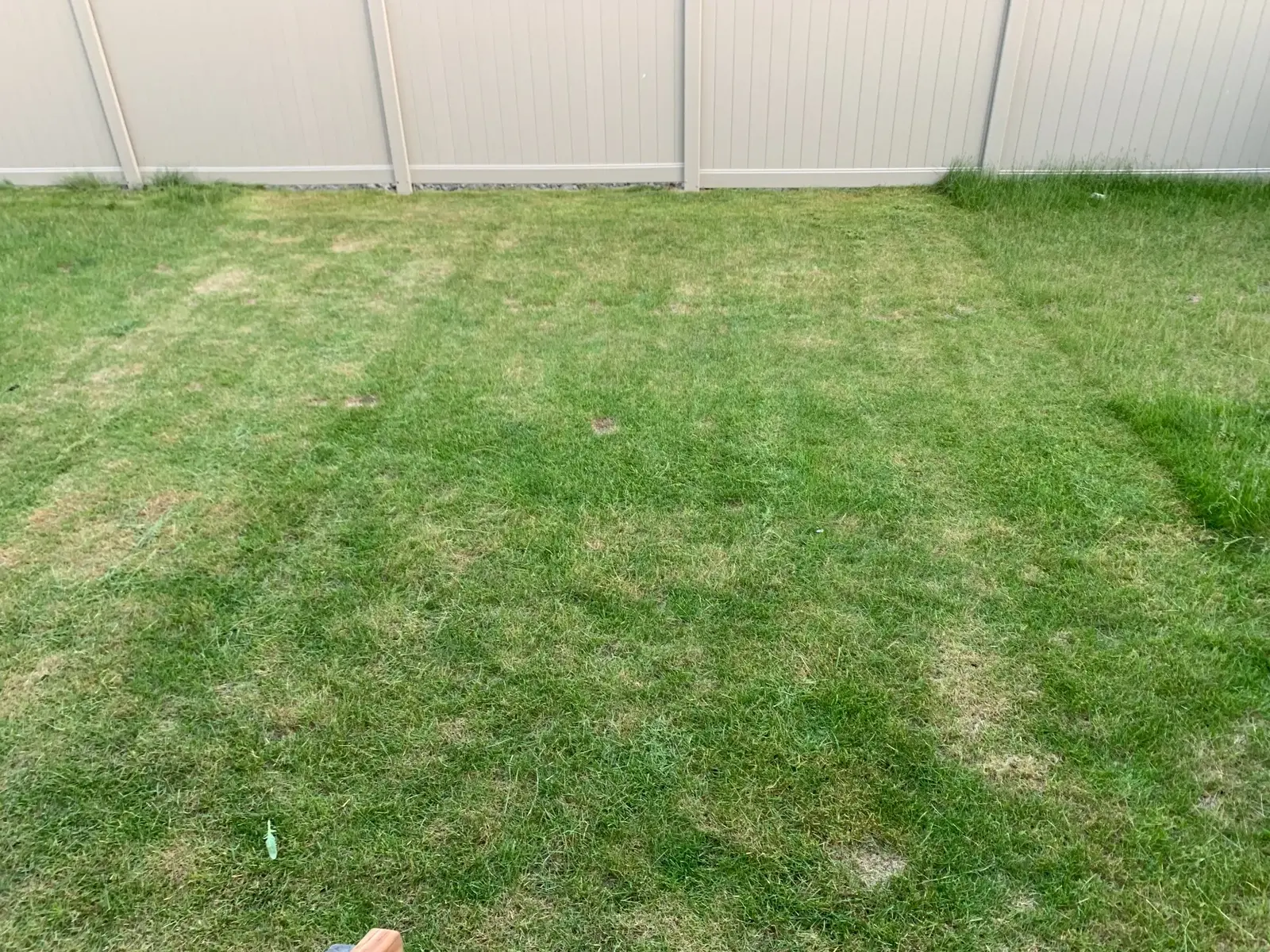
Aeration and dethatching are often advertised together, but they solve different problems. Before purchasing either service, start with what is actually happening in the lawn.
Core aeration targets soil compaction
A core aerator removes small plugs of soil from the lawn. The aim is to improve movement of air and water through compacted soil and give grass roots a better environment to grow.
Common reasons to investigate compaction include heavily travelled footpaths, recurring puddling on otherwise reasonable grades, or turf that struggles even with appropriate light and water. These signs are not a diagnosis by themselves.
Dethatching targets accumulated organic matter
Thatch is a layer of living and dead stems, roots and other organic material between green growth and the soil. A modest amount is normal; an excessive layer can interfere with water movement and healthy turf.
Dethatching mechanically removes material near the surface. It can stress turf, especially when the grass is already weak, dry or dormant. An aggressive dethatching treatment should not be automatic maintenance for every property.
How to choose the right approach
Inspect an actual plug of turf and soil rather than relying on colour alone. Is the soil hard and dense? Is there a thick springy thatch layer? Does the grass receive enough sunlight? Are there irrigation or drainage issues?
In many Ottawa lawns, aeration and overseeding may be considered together for compaction and density concerns. In others, adjusting mowing, watering or shade conditions offers better value than either mechanical service.
Timing and aftercare matter
Avoid mechanical work while soil is saturated or turf is under significant drought stress. Local weather, soil type, turf growth and the treatment used determine suitable timing. Request an explanation of expected disruption and aftercare before authorizing work.
Our recommendation is to treat these services as individual options inside a custom lawn plan, then finalize them after reviewing conditions on site.
Educational content prepared by Daisy & Co · October 29, 2026. Information is general; decisions depend on the specific property, current product specifications and field assessment.