Landscape Design
A practical guide to low-maintenance landscaping in East Ottawa
How to reduce recurring work without covering the entire yard in stone or choosing plants that do not suit the site.
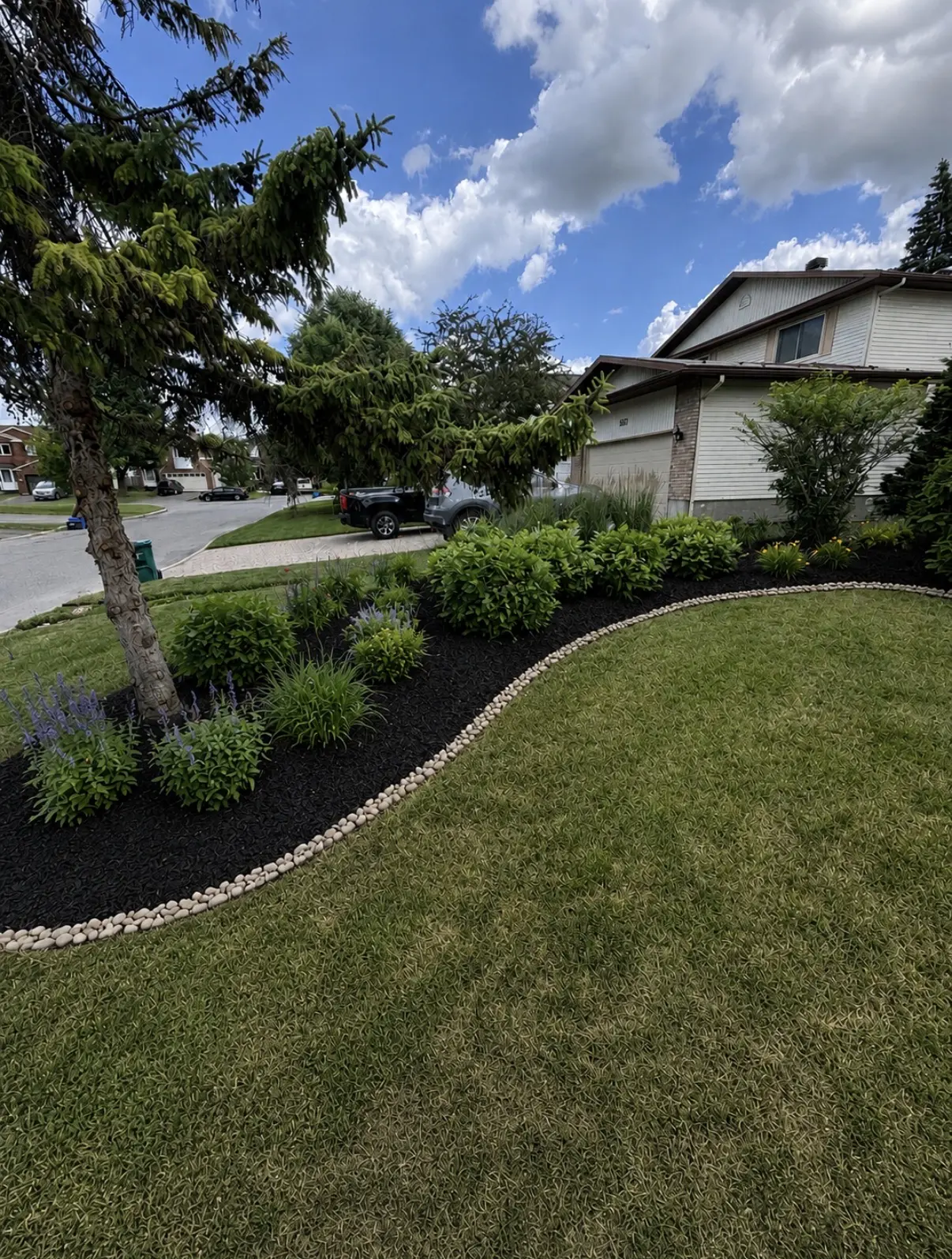
Low maintenance should mean fewer unnecessary tasks, not a lifeless yard. The strongest approach reduces weak turf, awkward edges, overcrowded plants and hard-to-reach spaces while keeping enough living structure to make the home feel settled through the seasons.
The short answer
- Choose plants by mature size, light and moisture—not the nursery photo.
- Use repeated groups and clear edges to make abundant planting feel orderly.
- Design access for mowing, pruning and snow storage before adding decorative details.
Start by naming the maintenance you dislike
One homeowner wants less mowing; another dislikes weeding, watering or annual hedge trimming. These are different design briefs. List the recurring tasks, how often they happen and which ones you are willing to keep.
A small lawn with simple edges may be easier than a large stone garden that collects weeds and leaves. Reducing maintenance requires understanding the work, not simply replacing green material with hard material.
Right plant, right place is the main strategy
A shrub that matures wider than its bed will demand repeated pruning. A sun-loving perennial in deep shade will thin, lean and invite replacement. Soil moisture, winter exposure, road salt, snow load and root competition all affect performance.
Choose a limited palette suited to each condition and repeat it. Native plants can be useful because many are adapted to regional conditions, but native does not mean every species will suit every Ottawa yard. Match the individual plant to the site.
Use structure before seasonal colour
Trees, shrubs, grasses and durable groundcovers create the framework. Flowers then add changing detail. If a garden relies entirely on short-blooming perennials, it may feel empty for much of the year and encourage constant additions.
A clear structure also makes fall and winter easier to accept. Seed heads, branching and evergreen forms can carry the design when flowers are gone.
Make edges easy to maintain
Every tight curve and isolated bed increases trimming. Broad, deliberate bed lines are easier to mow beside and usually read more clearly from the street. Where edging material is used, it should be installed for the soil, frost and intended maintenance method.
Keep enough clearance around utilities, gates and equipment routes. A beautiful edge that blocks a mower or snowblower creates recurring frustration.
Mulch and plant density work together
Mulch can reduce exposed soil, moderate moisture and make young planting look finished. It still needs correct depth and should not be piled against trunks or stems. As plants mature, their canopies should cover more soil and reduce the open area available to weeds.
Landscape fabric is not a universal answer. Organic material and windblown seed eventually collect above it, while fabric can complicate planting changes. Use it only where the full assembly and long-term plan justify it.
Treat decorative stone as a material, not a maintenance promise
Stone can be appropriate around drainage features, hot exposures and architectural compositions. Used everywhere, it can trap leaves, show weeds and create difficult transitions. Dark stone also absorbs heat, which may stress nearby plants.
The choice should follow the design and site, not the idea that stone eliminates work. It changes the work.
Plan irrigation and establishment
Even drought-tolerant plants need consistent water while roots establish. Group plants with similar needs and make hose or irrigation access realistic. A design that cannot be watered efficiently is likely to lose plants during the first difficult season.
After establishment, water according to actual soil and weather rather than a fixed daily habit. Deep, appropriate watering generally supports stronger roots than constant surface wetting.
A low-maintenance front-yard formula
Preserve a simple route to the door, use one clear bed shape, repeat a few structural plants and keep mature heights proportional to windows and entrances. Add a smaller number of seasonal plants where they will be seen from inside and along the arrival path.
Leave space for snow storage and sightlines near the driveway. The design should remain safe and legible in February, not only attractive in July.
Reduce lawn where it repeatedly fails
Turf is useful where people walk, play or need an open visual surface. It becomes high maintenance in narrow side yards, deep shade, steep slopes and tiny fragments cut apart by beds and utilities. Replacing the hardest pieces can simplify mowing without eliminating the lawn that works.
Choose the replacement based on conditions. A planted shade bed, mulched tree zone, stable path or widened garden can each solve a different problem. Do not cover a wet or poorly graded area until the water issue is understood.
Write the maintenance plan with the design
For every proposed element, ask what happens weekly, seasonally and every few years. Lawns need mowing and periodic repair; shrubs need monitoring and selective pruning; perennials need editing; interlock needs joints and edges inspected; mulch and stone beds still collect organic material.
Put those tasks into a simple calendar and decide who will do them. If the plan feels unrealistic on paper, change the design before construction. A landscape becomes genuinely lower maintenance when the expected work fits the household’s time, tools and budget.

A local note
Every yard has different conditions.
Use this as general guidance. If you want advice for your East Ottawa property, show us what is happening and we’ll help identify the sensible next step.
Ask Daisy about your yard →