Interlock
Should you repair or replace sinking interlock in Ottawa?
How to read settlement, drainage and surface wear before deciding what kind of project you need.
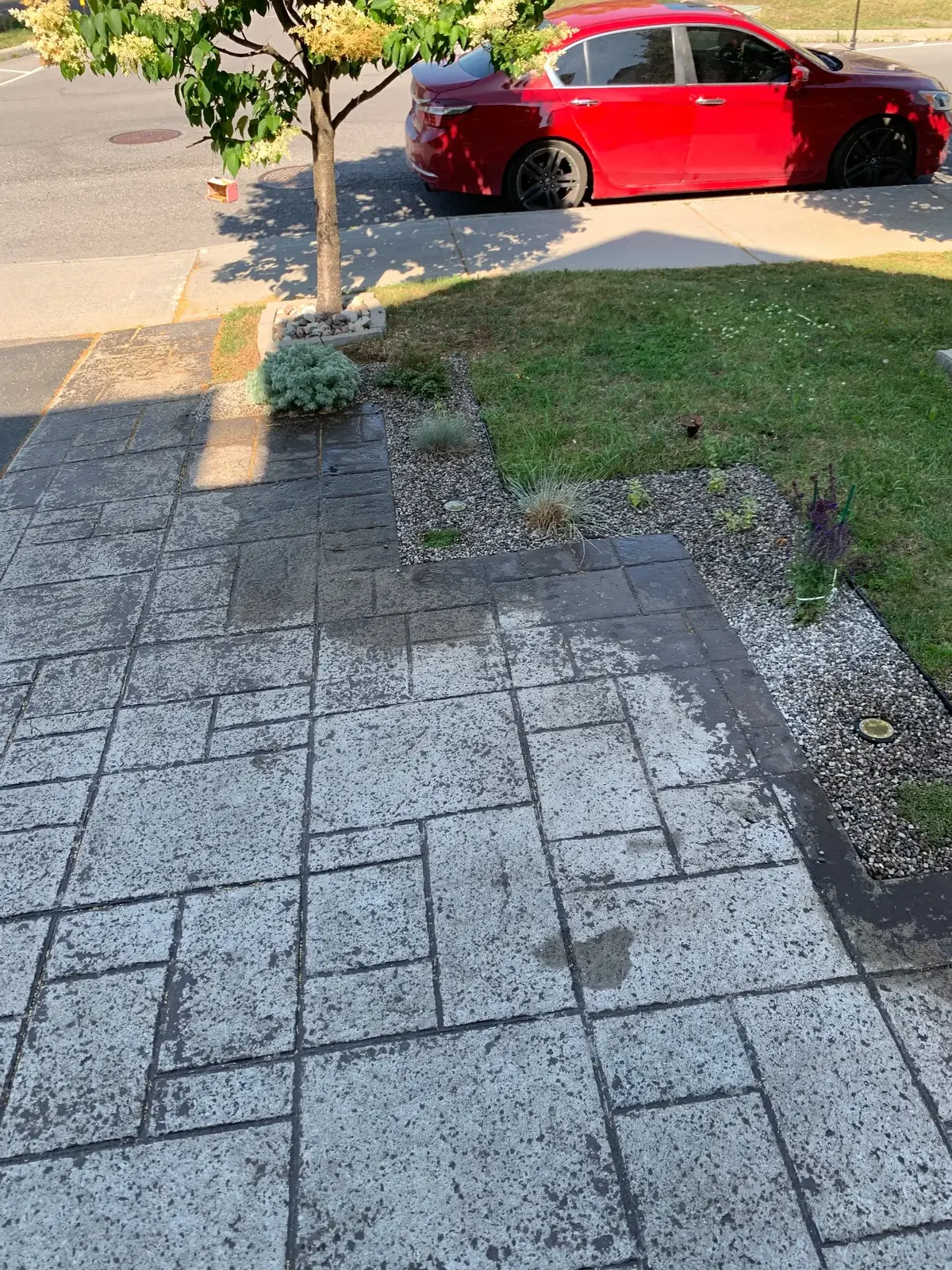
Sinking pavers do not automatically mean the entire installation has failed. A localized repair may be sensible when the affected area is limited and the surrounding system remains stable. Replacement becomes more likely when movement is widespread, drainage is wrong or the design no longer meets the home’s needs.
The short answer
- Mark where water sits and where the surface has moved.
- A repair must address the cause, not only reset the visible pavers.
- Keep extra matching pavers because discontinued colours and wear make exact matching difficult.
What settlement is telling you
A low spot can result from inadequate compaction, washed-out bedding, disturbed soil, edge failure or concentrated water. Settlement beside steps, downspouts and driveways deserves special attention because loads and water may be concentrated there.
Watch the area during rain and after snowmelt. Note whether the depression remains dry, holds water or directs it toward a structure. A photograph with a straightedge across the surface can make gradual movement easier to see.
When a lift-and-relay may be enough
Localized lift-and-relay work can be appropriate when pavers are reusable, the affected footprint is defined and surrounding grades provide somewhere safe for water to go. The repair typically involves lifting units, correcting the underlying material and grade, compacting in suitable layers, reinstalling and restoring joints.
The important phrase is correcting the underlying condition. Adding bedding material directly beneath a low paver without evaluating the base may produce a short-lived cosmetic improvement.
When replacement deserves consideration
Widespread waves, multiple failed edges, chronic ponding, an unsuitable original elevation or major changes to adjoining steps and driveways can make repeated spot repairs poor value. Replacement may also be reasonable when the homeowner needs a wider walk, safer transition or different layout.
Replacement does not mean every existing element must be discarded. Some units may be reusable in another area, but sorting, cleaning and matching should be discussed honestly in the scope.
Freeze-thaw is not a complete explanation
Ottawa winters create difficult conditions, but “freeze-thaw” alone does not diagnose a failure. Frost movement becomes more damaging when water is trapped, base preparation is inconsistent or drainage repeatedly saturates part of the system.
A proposal should explain how excavation, aggregate, compaction, edge restraint and surface grade work together for the specific application. No single material guarantees performance when the full assembly is wrong.
How to compare repair proposals
Ask what area will be lifted, how the contractor will establish final elevations, what base material will be replaced, how edges will be handled and where water will move afterward. Confirm whether broken pavers, polymeric sand, cleanup and adjoining lawn or garden restoration are included.
A lower repair price may cover fewer square feet or only the visible depression. A higher proposal may include rebuilding the transition that caused it. Compare causes and scope, not only totals.
Plan for colour and product differences
Existing pavers fade, stain and wear. Even the same product from a new manufacturing run may not match perfectly. If replacements are required, moving existing units from a less visible area or creating a deliberate border may look better than scattering new units randomly.
Keep leftover pavers from a new project in a protected location. A small matching stock can make future utility or settlement repairs much cleaner.
The decision in one sentence
Repair when the problem is local, diagnosable and compatible with the surrounding grades. Consider replacement when the failure is systemic, the layout is no longer useful or a repair would preserve the condition that caused the movement.
Steps, curbs and adjoining surfaces change the repair
Interlock rarely exists alone. It may meet poured concrete, asphalt, garage slabs, porch steps, retaining walls or municipal sidewalk. Those fixed elevations determine how much room exists to rebuild slope and may reveal that the low area is only one part of a larger transition problem.
A repair plan should identify which adjoining surfaces remain fixed and which can move. Resetting pavers higher may create an awkward riser or trap water at a door; lowering them may expose an edge or worsen driveway drainage. Measure the full route before choosing the repair elevation.
Questions to ask during the site visit
Ask what evidence points to the suspected cause, whether the issue is still moving and what outcome the contractor expects after repair. Request an explanation of the repair boundary, compaction, drainage, edge treatment and material matching. If the answer is simply that all interlock sinks, keep asking.
Also discuss disruption: access to the entrance, storage of lifted pavers, dust, noise, weather delays and restoration of adjacent turf or gardens. A technically sound repair should also have a workable plan for the household.

A local note
Every yard has different conditions.
Use this as general guidance. If you want advice for your East Ottawa property, show us what is happening and we’ll help identify the sensible next step.
Ask Daisy about your yard →